The Neighborhood
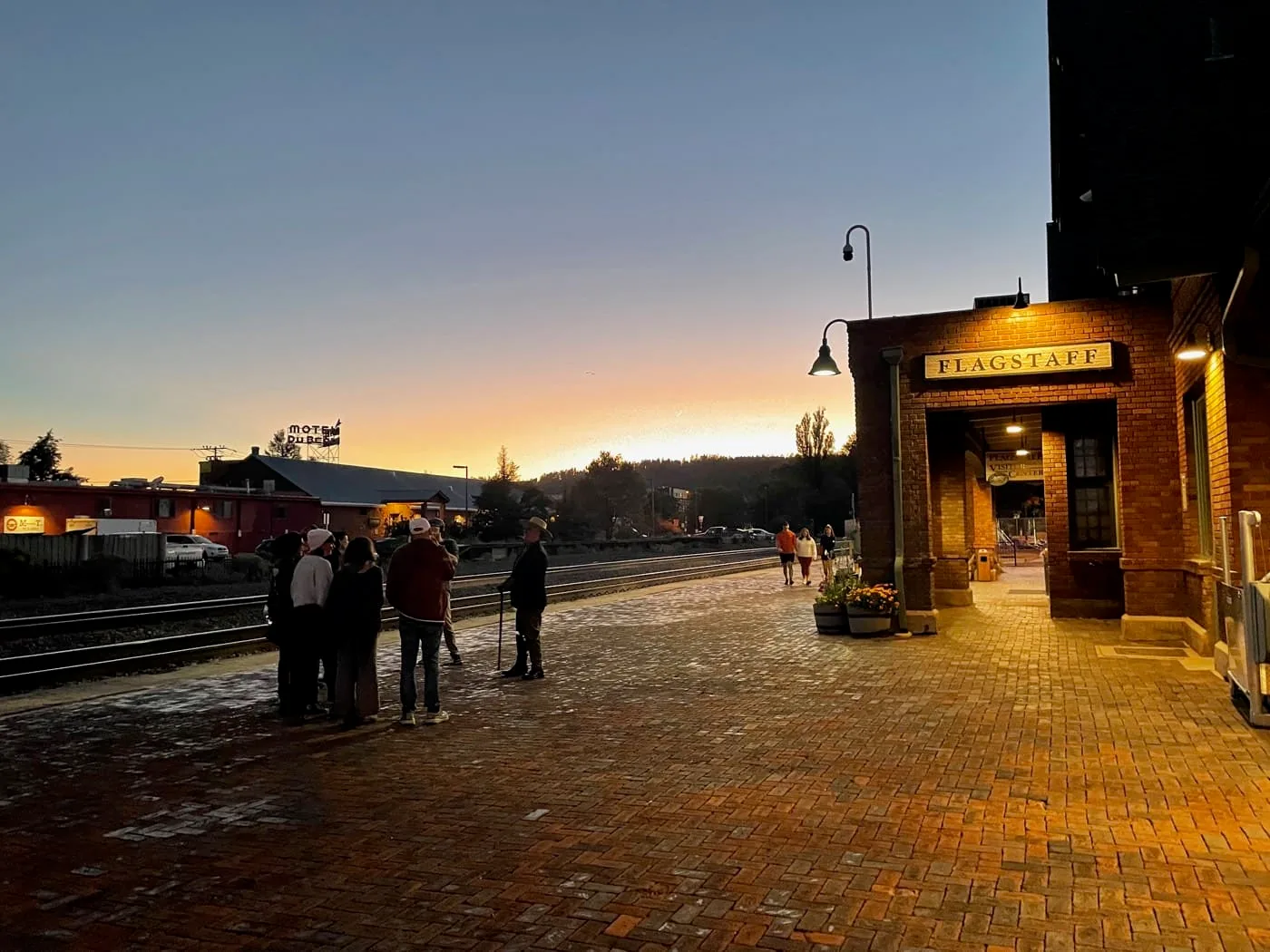
South of the tracks: a short history of Flagstaff's Southside
Downtown Flagstaff kept its front windows clean. The Southside did the work: the mill, the rail yard, the boarding houses, the saloons and the houses the town did not talk about. This is the neighborhood the crawl drinks in, and why.
Where it is
The Southside is the neighborhood between the BNSF tracks and Northern Arizona University: roughly Mikes Pike and Beaver Street on the west, the Rio de Flag and Franklin Avenue on the south, Elden Street and Lone Tree Road on the east, Phoenix Avenue on the north. Its main streets are Mikes Pike, South San Francisco Street and South Beaver Street, and the crawl covers about a mile of them. The district was listed on the National Register of Historic Places in 2010 with 142 contributing buildings.
Who built it
The railroad arrived on August 1, 1882, and the sawmill south of the tracks was already running. The people who worked the mill, the rail yard and the sheep outfits lived here: Mexican and New Mexican families, Basque sheepherders who put up boarding houses and a handball court on South San Francisco Street, and, from 1925, hundreds of Black lumber workers the Cady Lumber Company brought west from Louisiana. By 1920 nearly a third of Flagstaff's families were Hispanic, almost all of them living south of the tracks or in Old Town. From the 1930s until 1977 the neighborhood was redlined. The National Register calls it the largest historic Hispanic and Black neighborhood in the city, and the buildings that survive, from the 1926 Tourist Home to Our Lady of Guadalupe to the Dunbar School, are the reason it is on the Register at all.
The restricted district
For decades these blocks were also Flagstaff's red-light district, which the newspapers called the restricted district and the town's respectable side pretended not to visit. The paper trail is the remarkable part. Saloons paid a quarterly fee and the houses paid monthly; when the reformers pushed, the working women out-negotiated the council on their taxes. In 1895 the council passed Ordinance Ten, a ban on everything from profane language to opium to women entering saloons. The trade carried on for another two decades anyway.
One of its owners became among the wealthiest self-made women in Flagstaff. Her name was Dutch May Peters Prescott, and the Coconino Sun called her peacefully inclined, with no enemies. In August 1916 she was found shot in a burning shack behind one of her houses on South San Francisco Street, her newly wedded husband beside her with his throat cut, the scene arranged to read as a murder-suicide. The town decided not to look too closely. Nobody was charged, nobody claimed the bodies, and both rest in Potter's Field at Citizens Cemetery. Co-founder Susan Johnson wrote the case up in Wicked Flagstaff; your guide tells it standing on the blocks she owned.
Route 66, the first time
From 1926 to 1934, Route 66 ran south of the tracks, along Phoenix Avenue and Mikes Pike, which is why a 1921 motel, a flat-iron laundry and a run of 1930s brick storefronts stand where they do. A Public Works underpass finished at Christmas 1934 moved the highway north to Santa Fe Avenue and Milton Road, and the Southside kept the quieter version of the road. The city calls Phoenix Avenue possibly the most intact stretch of early-1930s Route 66 in the country. Mother Road Brewing, the crawl's first stop, sits on that old alignment in a 1920s laundry building, named for what John Steinbeck called the highway.
The tunnels, honestly
Everyone asks. Steam-heat mains ran under downtown from 1920 and were sealed long ago. South of the tracks, our research traces a basement passage from the old Hotel Paso del Norte, a 1920s brick hotel on South San Francisco Street, toward a rooming house across the way, and a working passage survives under South Beaver Street on private property. Nobody tours them, and the crawl does not go below ground. What a guest can do is stand on top of the story.
The Southside tonight
The blocks that held the boarding houses now hold Flagstaff's brewery row: Beaver Street Brewery, the city's first brewpub, since 1994; Lumberyard Brewing in an 1890 lumber company building since 2010; Mother Road since 2011; Historic Brewing's Barrel + Bottle House in the 1937 Lucero Building since 2015; the Southside Tavern in the 1930 DeMiguel Building. The Tourist Home is a cafe again. The Mountain Line Downtown Connection Center sits on Phoenix Avenue. The neighborhood is the reason the crawl moved here: the stories were always on this side of the tracks.
Want the stories without the bar stops? The Southside Haunted History Tour walks these blocks as a 90-minute all-ages private tour. Want them with a drink in hand? That is the crawl.
21+ · Valid ID Required
Pick the night. We bring the stories.
Public night Friday, October 30, 2026, 6 to 8 PM · $55 per person · 16 seats · drinks not included
Private crawls from $400 per group · up to 16 guests · about two hours · 3 bar stops
1,000+ five-star reviews. Best of Flagstaff three years running.
Your attendance is gravely appreciated.